
The volume of nature and science content available on streaming platforms, podcast apps, and YouTube channels has never been higher. That abundance is both a gift and a problem: it’s easy to default to whatever surfaces first rather than seeking out the work that’s genuinely worth your time.
This list is curated, opinionated, and current. Every entry was selected based on scientific accuracy, production quality, and storytelling craft. We’ve organized them by format.
Feature-Length and Series Documentaries
1. Our Oceans (Netflix, 2025)
A four-part series filmed across all five major ocean basins using submersible-mounted cameras capable of operating at depths exceeding 6,000 meters. The deep-sea footage, including the first high-definition film of a live giant squid hunting at depth, is genuinely unprecedented.
Why it stands out: The narration avoids anthropomorphizing. It treats marine organisms as subjects of scientific interest rather than characters in a human narrative. Refreshingly rigorous for a mainstream platform.
| Detail | Info |
| Format | 4 episodes × 55 minutes |
| Platform | Netflix |
| Scientific advisor | Dr. Sylvia Earle |
| Best for | Ocean science enthusiasts, marine biology students |
2. Rewilding Britain (BBC, 2025)
Chronicles three rewilding projects across Scotland, Wales, and southern England over 18 months. The Knepp Estate segment, showing how abandoned farmland transformed into one of Britain’s richest wildlife habitats, is the standout.
Key insight: The series doesn’t shy from the economic conflicts. Farmers losing subsidies, communities divided over wolf reintroduction proposals, landowners navigating legal complexity. It’s conservation without the sanitized narrative.
3. The Carbon Question (PBS/NOVA, 2026)
A two-hour special examining the science, economics, and politics of carbon dioxide removal. Covers direct air capture facilities in Iceland, ocean alkalinity enhancement trials, and the controversial history of carbon offset markets.
Why it matters now: This directly relates to several of the developments we covered in our article on breakthrough scientific discoveries shaping 2026. The documentary provides visual context for technologies that are otherwise difficult to grasp from text alone.
4. Night Shift (Apple TV+, 2025)
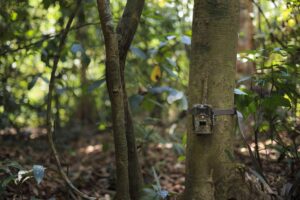
Entirely filmed using next-generation infrared and thermal imaging cameras, this series captures animal behavior after dark, a period that represents half of all ecological activity but has been historically underrepresented in wildlife filmmaking.
Highlights include thermal footage of polar bears hunting in Arctic darkness and infrared recording of bat echolocation patterns rendered visually for the first time.
5. Plastic Earth (HBO Documentary Films, 2026)
A feature-length investigation into the global plastic waste stream. The filmmakers embedded with waste management workers in Indonesia, recycling facility operators in Germany, and petrochemical lobbyists in Washington D.C.
The most striking sequence follows a single plastic bottle from manufacture in Texas to a beach in the Philippines, a journey of 14,000 kilometers and seven months. It’s a visual companion to the data we explored in our analysis of the global plastic pollution crisis.
Podcasts
6. Ologies with Alie Ward
Running since 2017, this remains the gold standard for accessible science interviewing. Each episode features a specialist in a specific “-ology”: from volcanology to mycology to marine mammalogy.
- Format: Weekly, 60-90 minutes
- Best episodes for PoulsMSC readers: Tidepooling (2024), Ichnology (2025), Cetology (2023)
- Platform: All major podcast apps
- Link: alieward.com/ologies
7. Climate One (Commonwealth Club)
Hosted from San Francisco, Climate One features in-depth conversations with climate scientists, policymakers, economists, and activists. The tone is serious without being alarmist; a difficult balance that this show consistently achieves.
- Format: Weekly, 45-55 minutes
- Standout 2025 episodes: “The Ocean Carbon Sink” (March), “Geoengineering Ethics” (September)
- Link: climateone.org
8. Unexplainable (Vox Media)
Focuses on scientific questions that remain genuinely unresolved. Episodes on dark matter, the origins of consciousness, and why we sleep acknowledge uncertainty without descending into speculation. It models intellectual humility, a quality underrepresented in science media.
- Format: Weekly, 25-35 minutes
- Link: Available on all podcast platforms
YouTube Channels
9. Journey to the Microcosmos
Produced in partnership with a microscopy laboratory, this channel presents footage of microscopic organisms (tardigrades, rotifers, ciliates) with meditative narration that balances wonder with accuracy. The production quality rivals anything on mainstream platforms.
- Subscribers: 2M+
- Average video length: 8-12 minutes
- Why it works: It reveals an entire world that exists in a drop of pond water. Consistently one of the most visually stunning channels on the platform.
10. Practical Engineering
Not nature-focused, but essential viewing for anyone interested in how human infrastructure interacts with natural systems. Episodes on dam engineering, water treatment, stormwater management, and coastal erosion protection are directly relevant to environmental science.
- Subscribers: 4M+
- Average video length: 15-20 minutes

How to Get the Most Out of Science Media
A few principles for consuming science content critically:
- Check the source: Documentaries with named scientific advisors are more reliable than those without.
- Watch for false balance: Some productions give equal airtime to fringe positions and scientific consensus. The scientific community’s confidence in climate change, evolution, and vaccine safety is not a matter of ongoing debate.
- Follow up: Good science media should make you want to learn more. If a documentary or podcast episode sparks curiosity, follow the cited research. The primary literature is increasingly open-access.
- Seek discomfort: The most valuable content challenges existing assumptions rather than confirming them.
For more ways to engage with the natural world beyond a screen, our guide to nature-inspired hobbies covers options ranging from tide pooling to citizen science. And for context on the marine ecosystems featured in many of these productions, start with our overview of Pacific Northwest marine ecosystems.